
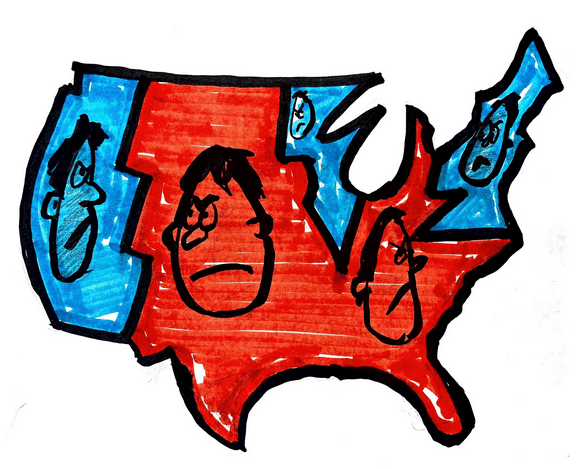
We live under a cruel, abusive, and lawless federal government. Decent people can all see that—it’s become hard to deny. For those cities and states under attack, the question is how we respond. Some cities and state governments are showing ways to respond. Masses of regular people are showing other ways. More is needed.
With each new attack on a city—L.A. to Portland to Minneapolis—we see communities of people learning more about best practices for resistance while building on existing civic organization within their own communities.
State and local governments have also been fighting back in various ways. State attorneys general have filed a large number of lawsuits against federal criminal behavior (including 50 suits in the past year from my own state of Washington). Blue states have created noncooperating interstate compacts (for example, the West Coast Health Alliance formed to counteract the unscientific policies coming from national Health & Human Services under RFK, Jr.). Mayors like Zohran Mamdani in NYC and Katie Wilson in Seattle have been working to prevent federal abuses in their cities. Still, more is needed.
Our criminal federal government has put us into uncharted territory, where they use every opportunity to test the limits of their power. But state and local governments also have powers they have not yet exercised, according Christopher Armitage, who has been promoting what he and others call “soft secession,” which basically means becoming as independent as possible within the framework of existing US laws.
Armitage argues that state and local governments need to become more aggressive in enforcing their own laws against a hostile federal government. Republican states have long been using “states’ rights” arguments to oppose federal policies they don’t agree with. Democratic states need to do the same, aggressively testing the limits of their own powers like our opponents. This is no time to be timid.
Armitage has written a short booklet called Intro to Soft Secession that I highly recommend. He outlines strategies that blue states can take to gain greater independence and be less at the mercy of a hostile federal government. We can all encourage our state governments to enact what we might call an independence agenda. Here are some examples:
• Prosecute illegal federal behavior. Federal attacks on blue cities and states have been cruel and lawless, violating many state and local laws. State and local prosecutors need to be more aggressive in prosecuting these violations in their own courts. Go beyond filing civil lawsuits and actually prosecute the lawbreakers. Note that people convicted in state courts cannot be pardoned by the president.
• Seek greater financial independence. The current federal regime has shown great willingness to punish blue state and local governments by withholding federal funds. It is wise to become less dependent on such federal support. One way to do this include creating a public bank that provides affordable student loans, funds infrastructure without Wall Street, and provides more loans to local communities. Public utilities for electricity, water, internet, and other essential services can lower costs and keep money circulating in local economies. Public health care options (like Washington state’s Cascade Care) cut out the private insurance middle man. As Armitage notes, financial independence enables resistance.
• Redirect tax dollars. Blue state tax money is subsidizing red America at an enormous rate. In 2022, just seven blue states collectively sent $180 billion more in federal taxes than they received in federal spending. California lost $72 billion, Massachusetts $30 billion, Washington state $22.5 billion, for example. This creates great financial leverage and negotiating power for blue states. State governments can create a escrow accounts for tax payments from public employees. If the federal government illegally withholds federal spending from targeted states, those states can withhold tax money to the federal government. This is not tax evasion, but simply enforcing federal laws and obligations.
These are just a few examples of an independence agenda. Such efforts will surely face legal challenges, but at a time when the federal government is testing the limits of its legal powers, state governments need to respond in kind.
It’s time for blue states to become as independent as possible, practicing strategies of “non-cooperative federalism” or “soft secession.” Doing so also puts us in a better position to consider hard secession if that ever becomes necessary.
Top image: Robert Reich

 freelansing in Seattle
Leave a comment